
Simple and Banal
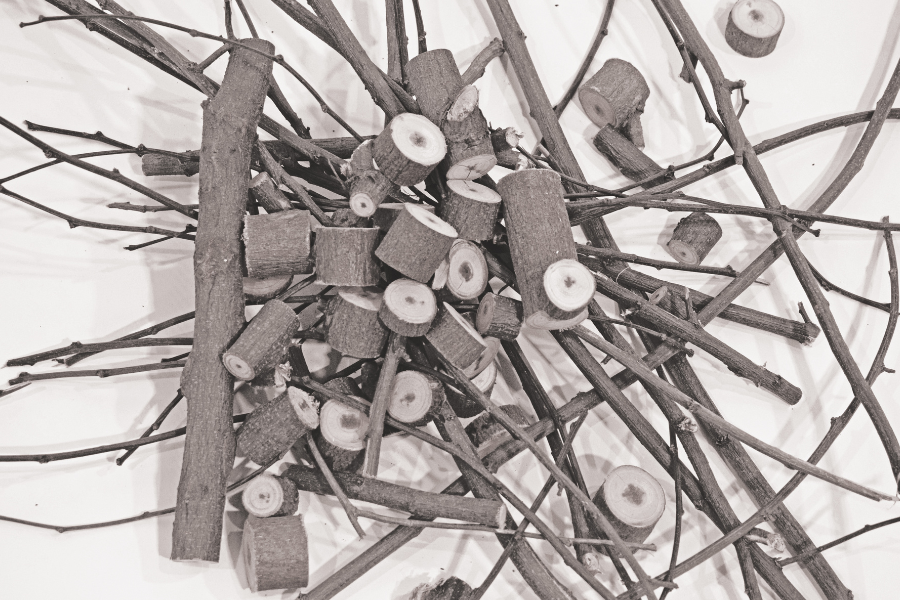
The project deals with banality as one of the most present, yet often unnoticed, structures of everyday life. Starting from common situations, patterns of behaviour, and relationships that constantly repeat themselves, the works point out that the banal is not merely harmless or trivial, but often contains elements of absurdity, discomfort, social toxicity, and concealed violence that become normalized over time.
The exhibition seeks to draw attention to that which is so familiar that it almost ceases to be visible: the small mechanisms of behaviour, stereotypical reactions, unnecessary habits, exhausting social rituals, and meaningless forms of communication that shape everyday existence. Precisely through this constant presence, banality acquires its power – it becomes something that no longer surprises, yet continuously drains, burdens, and conditions us.
This approach to the banal is explored through sculptures and installations that oscillate between humour and critique. Certain works employ irony, exaggeration, and visual absurdity in order to present banal situations in their full senselessness, while others more openly point to the toxic behavioural models hidden behind these seemingly insignificant scenes. Humour here is not a mean of softening the subject, but rather a way of leading the viewer toward recognizing what they initially laugh at, only to then discover their own experience reflected within it.
In contrast to banality, some works introduce simpler, more reduced forms that appear calm, quiet, and purified. Their role is not to offer a completely opposite world, but to establish a contrast to the visual and psychological overcrowding produced by banality. Through this collision of the intrusive and the unobtrusive, the excessive and the necessary, a space opens for reconsidering what we have grown accustomed to accepting as normal.
Different materials and formal procedures further intensify this relationship: from static and reduced forms to moving, interactive, and deliberately exaggerated objects that occasionally flirt with kitsch and vulgarity. In this way, the works do not merely represent banal scenes, but the very logic of banality itself – its superficiality, its tedious persistence, its ability to return endlessly in new forms.
The exhibition thus raises the question of to what extent everyday life is constructed precisely from such repetitive, seemingly insignificant situations, and how willing we are to recognize them as something that shapes us more profoundly than grand and exceptional events. Through humour, irony, and occasional sharp criticism, the works seek to draw banality out of the realm of the unnoticed and present it as a space in which contemporary relationships, habits, and social mechanisms are most clearly reflected.
