Symposium
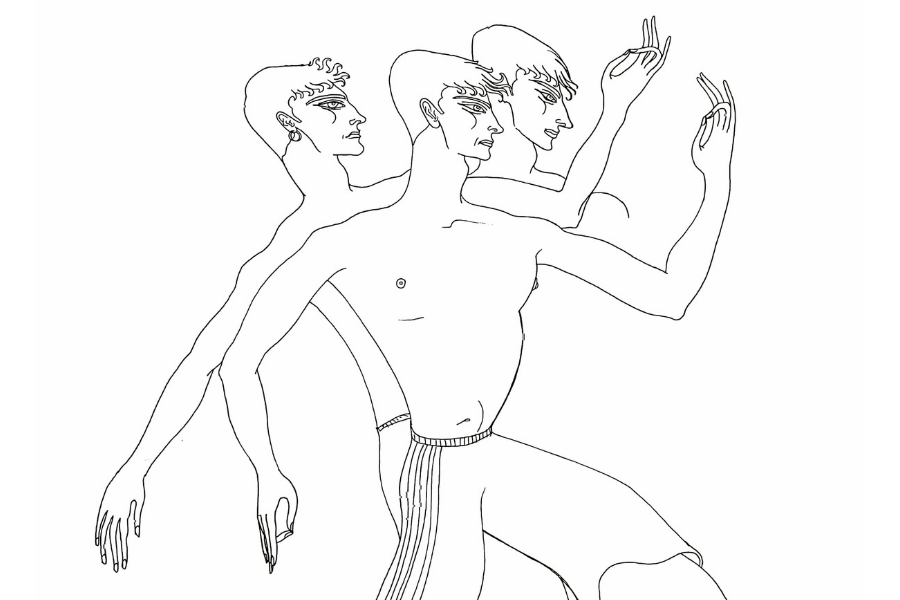
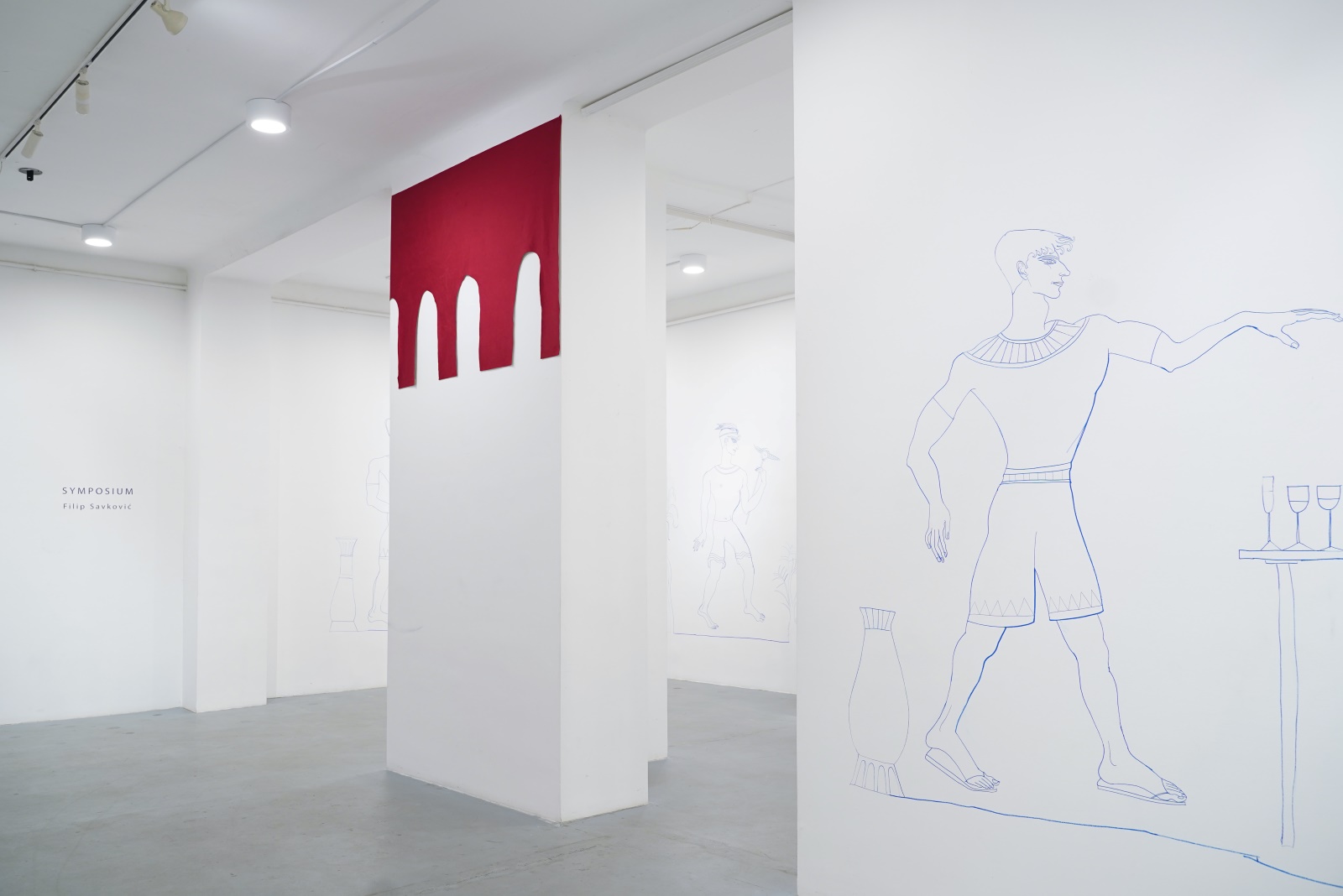
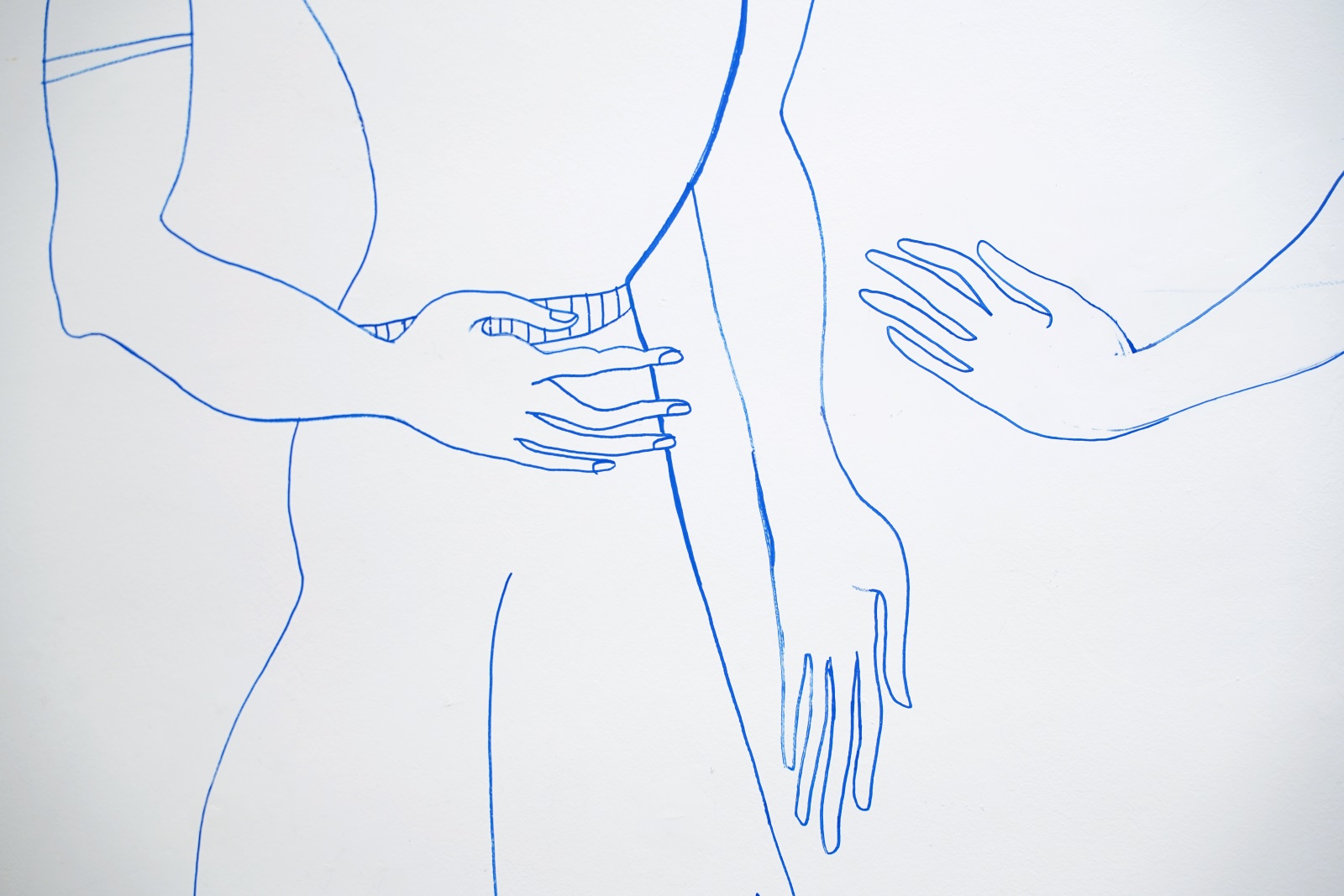
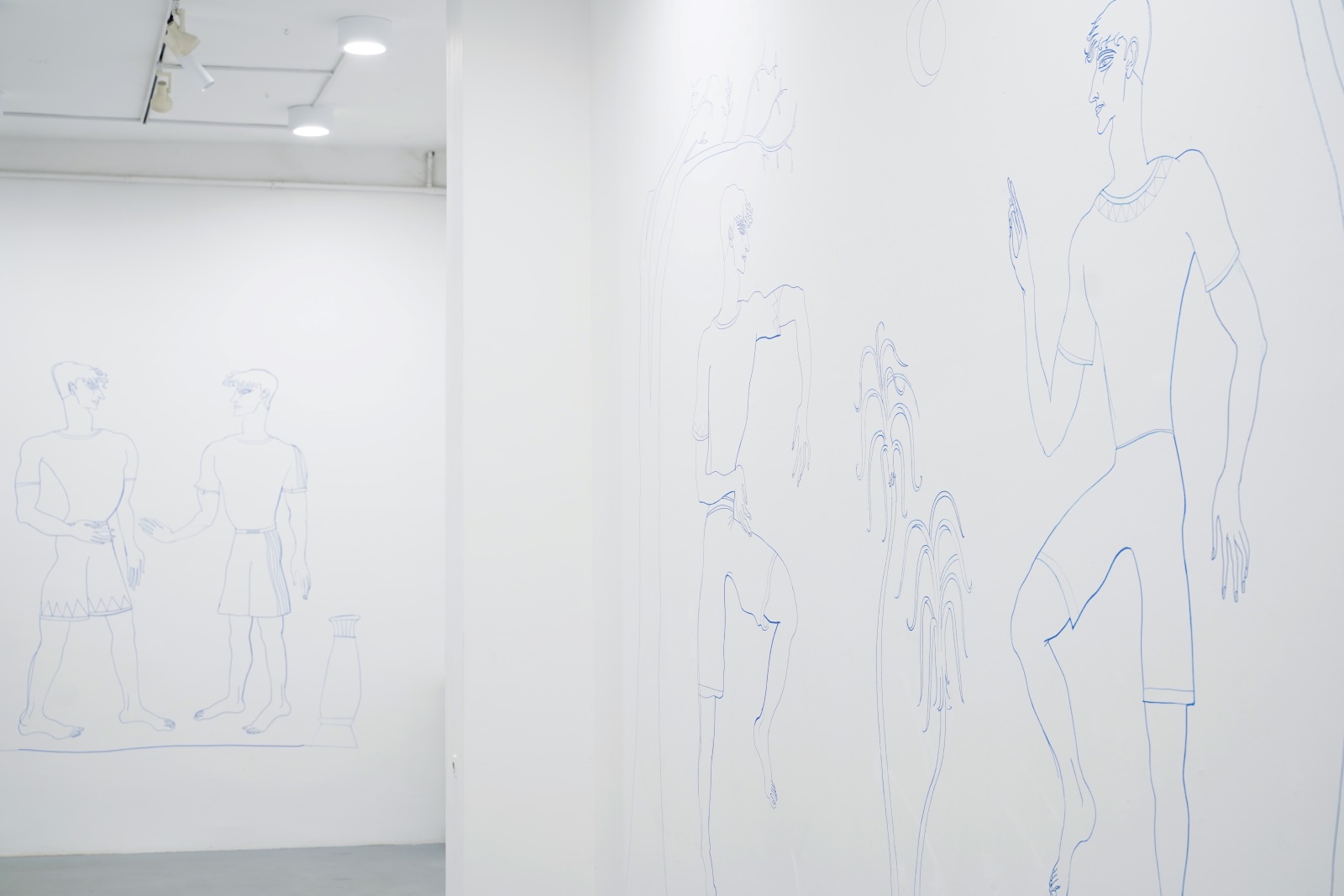
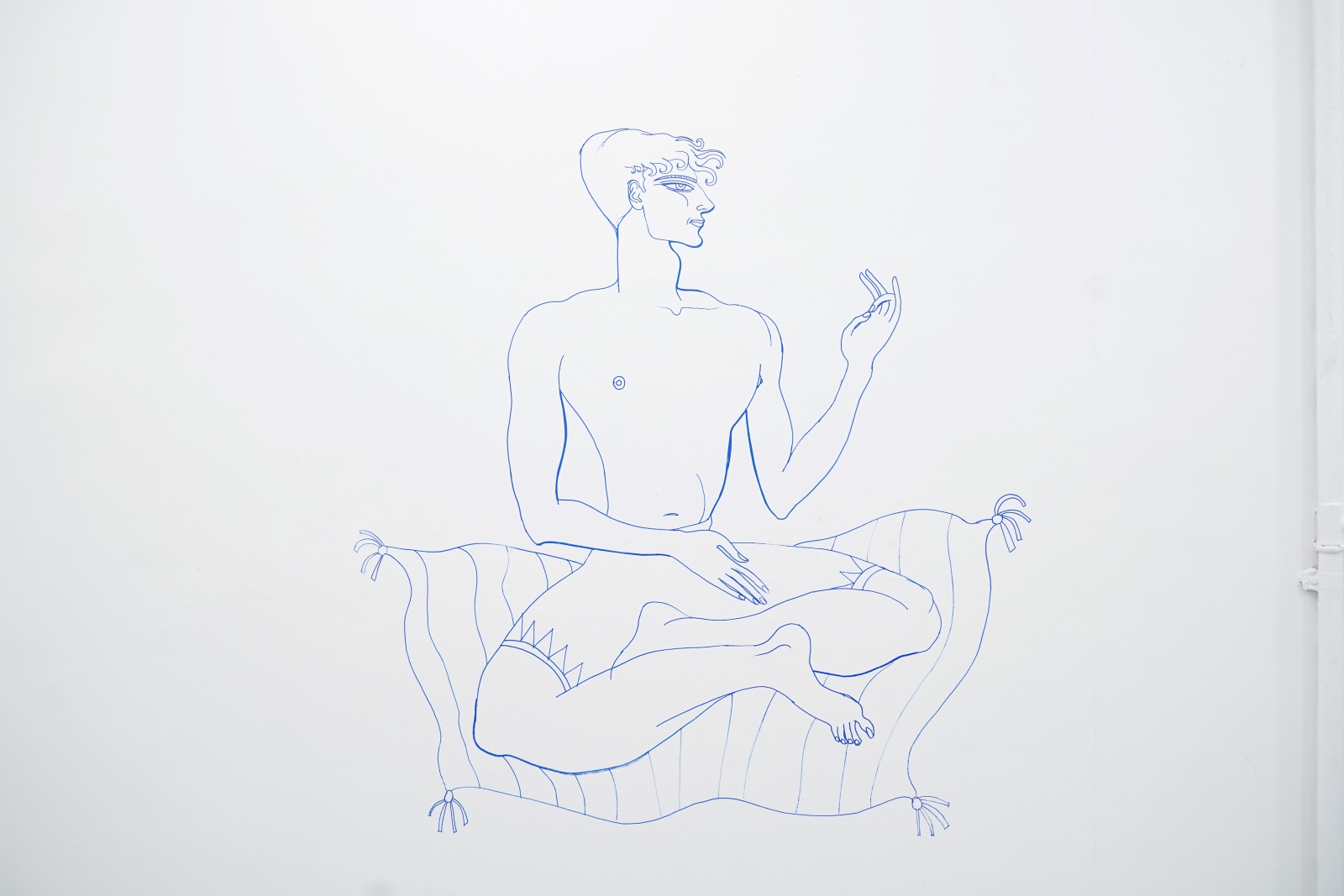
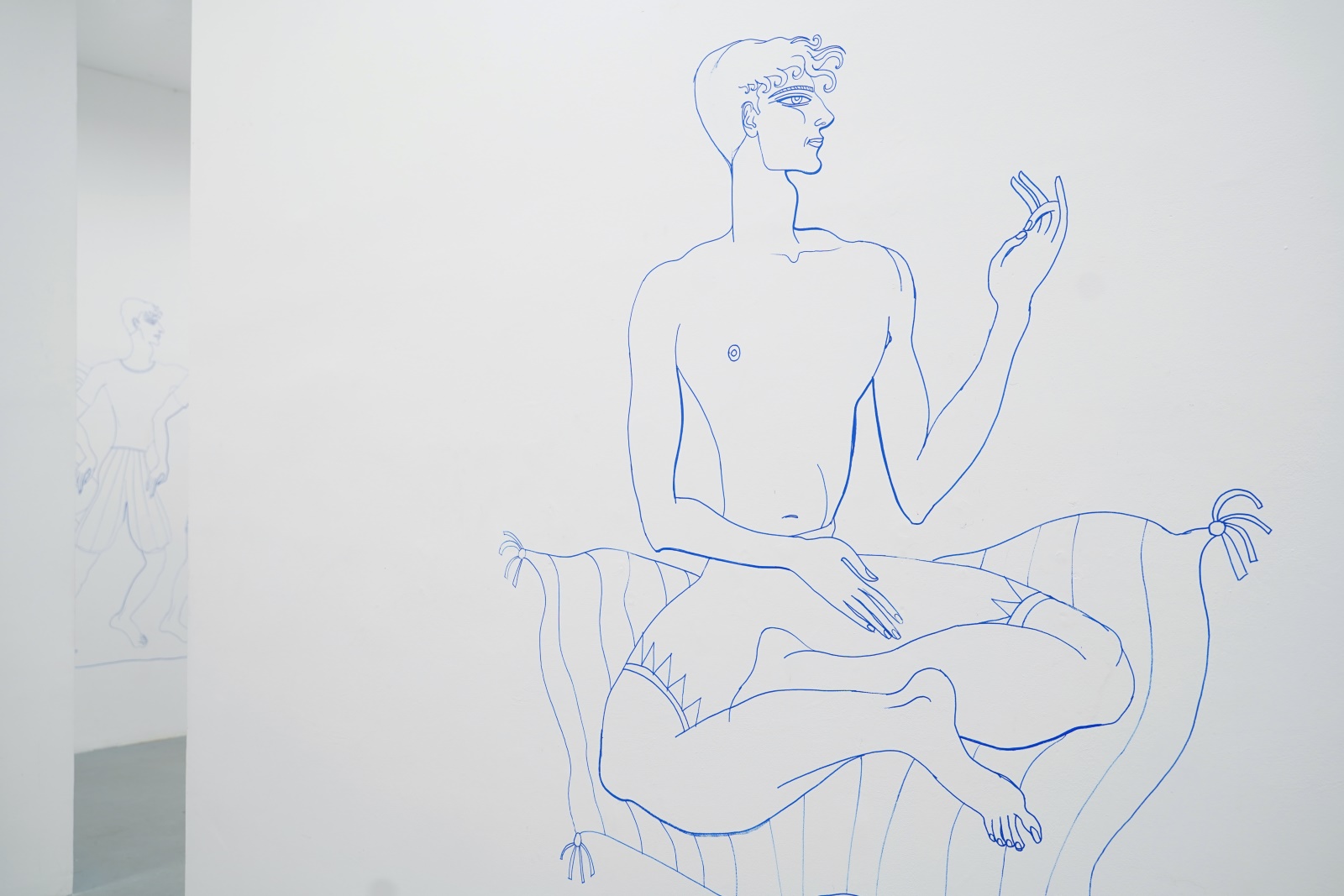
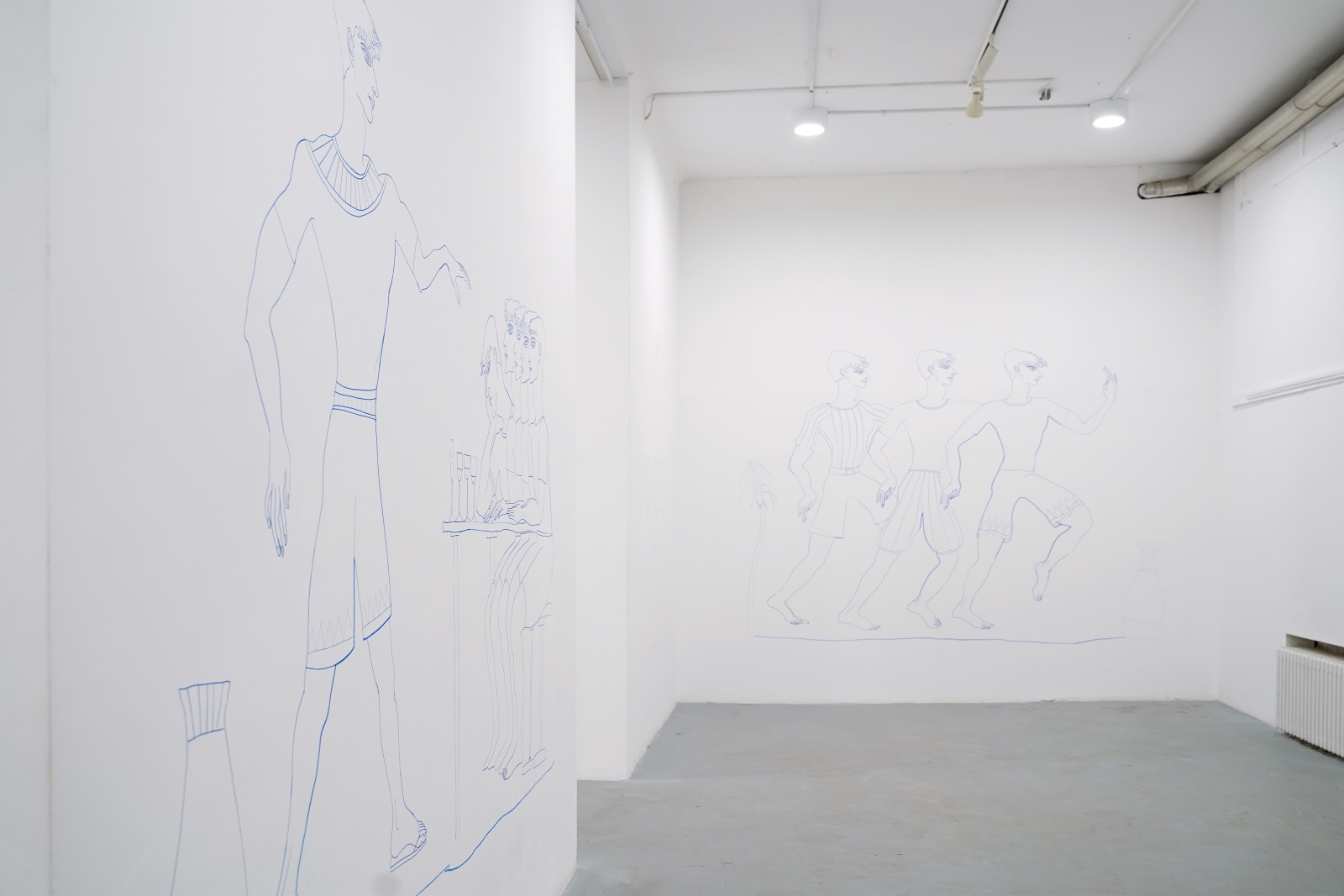
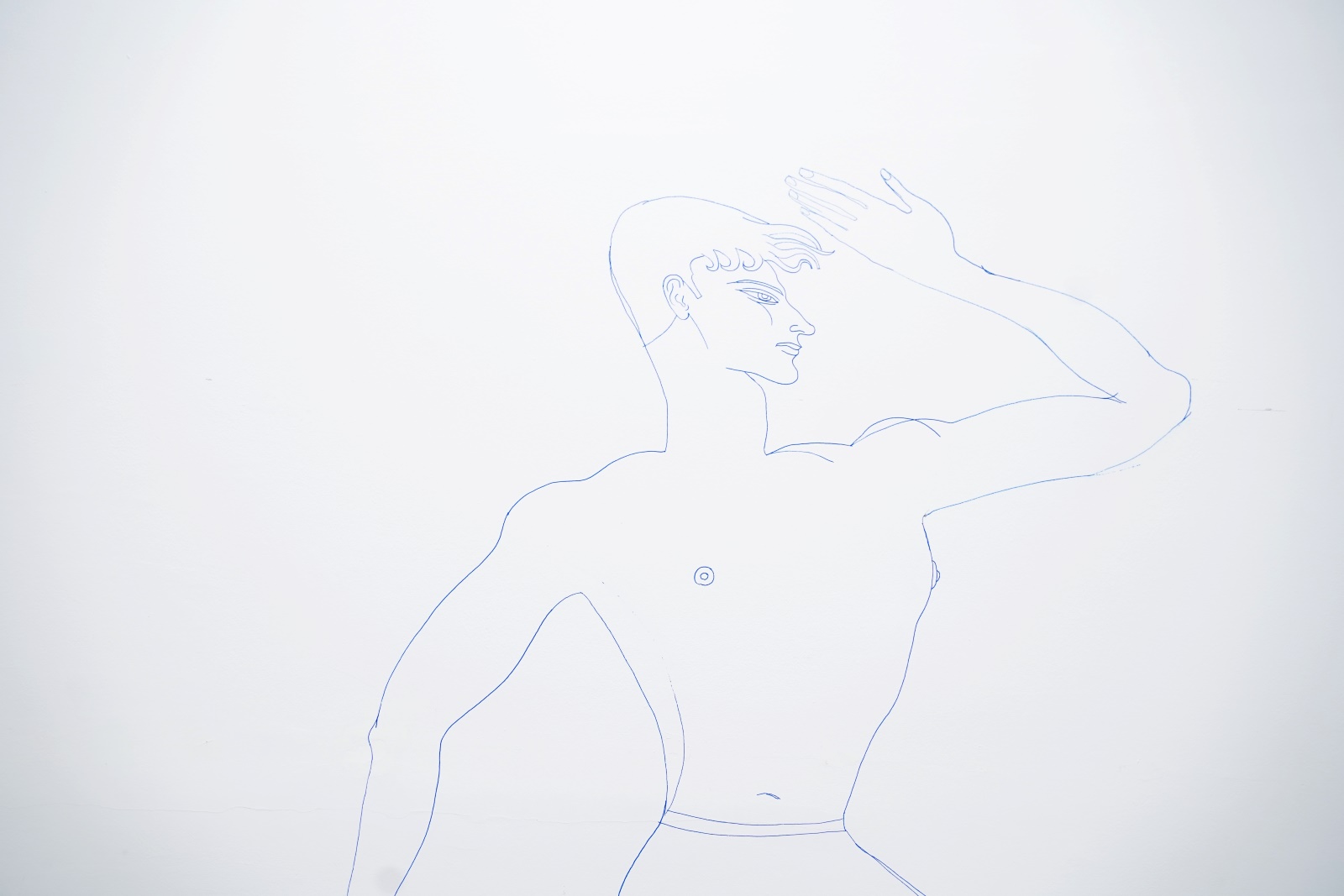
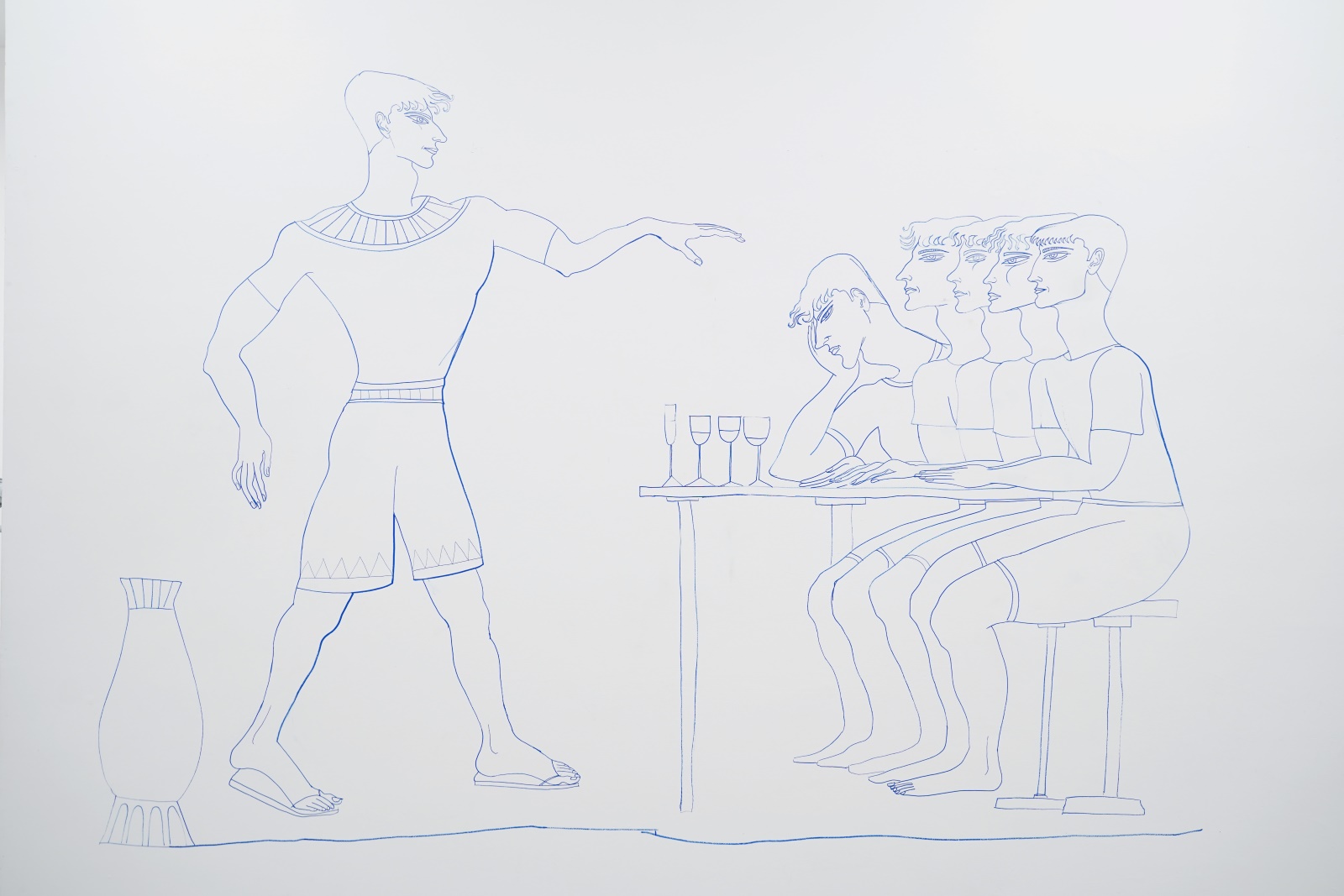
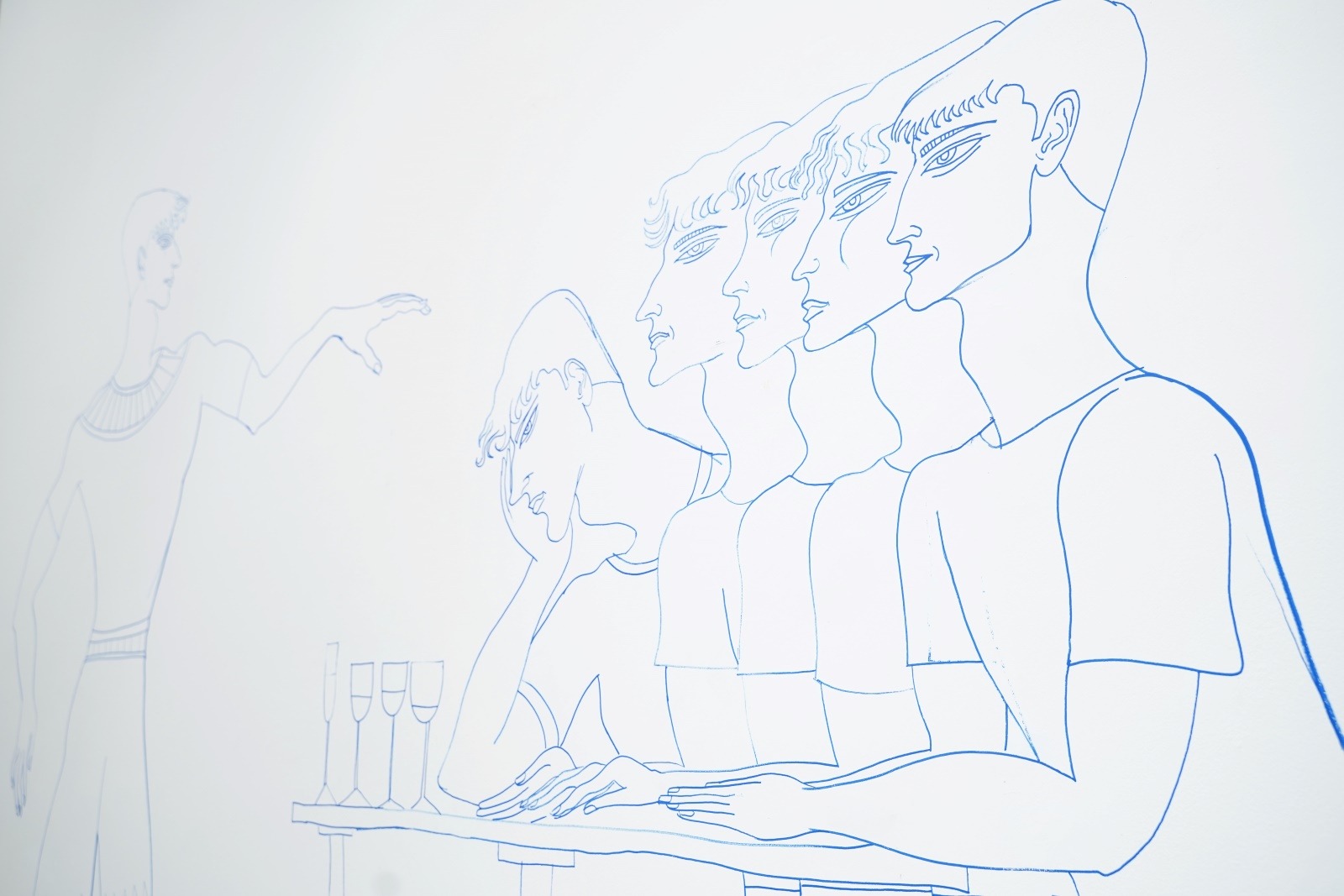
The exhibition of Filip Savković represents a logical continuation and further development of the themes that occupy him as an artist. In his characteristic syncretic spirit, the author combines, both conceptually and visually, thematically related elements of different cultures, schools of thought, and religions, insisting on the universality of human experience, or rather one of its particular aspects: love. In the exhibition titled “Symposium”, he transforms the gallery space by drawing directly on the walls, guiding us into a kind of temple.
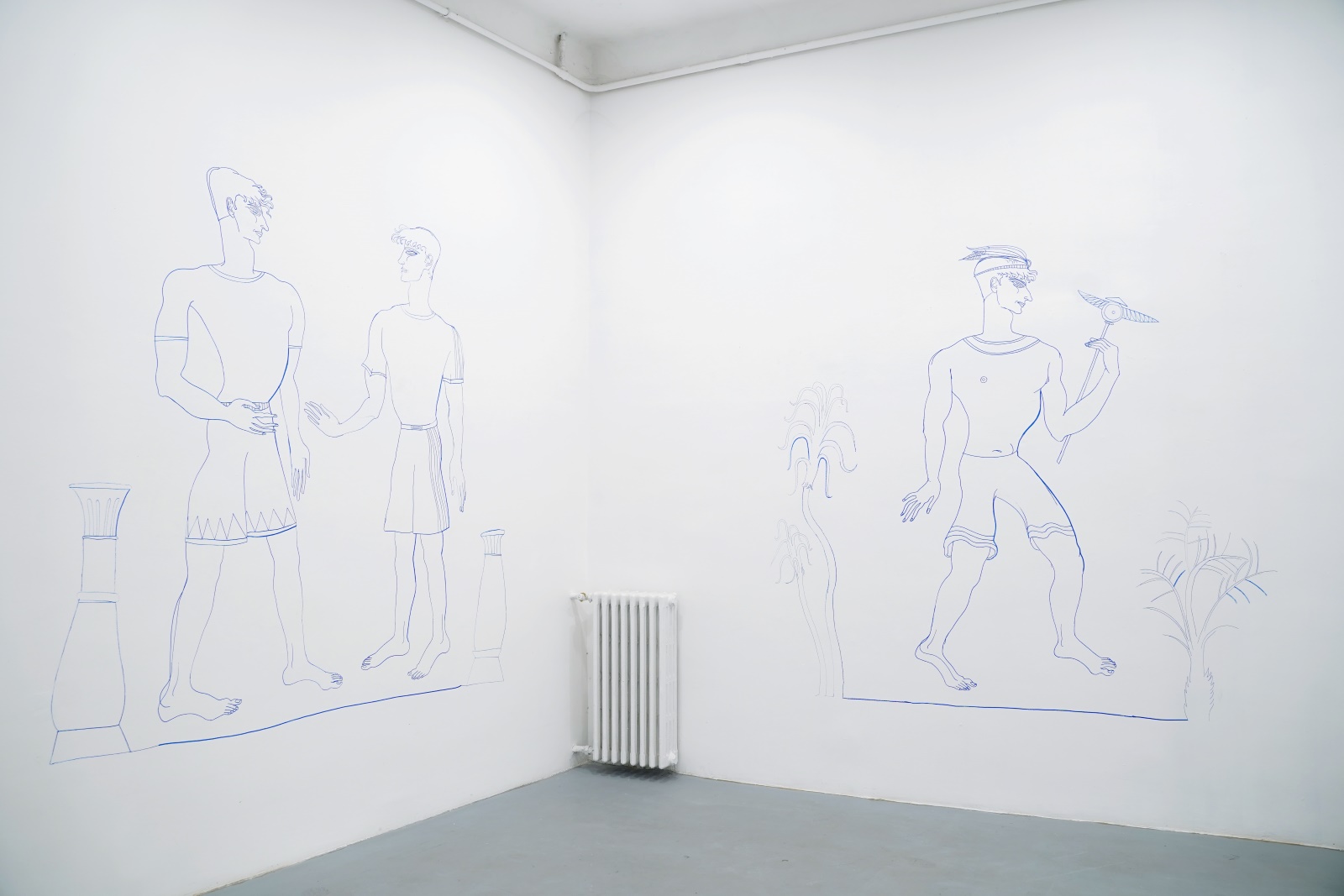
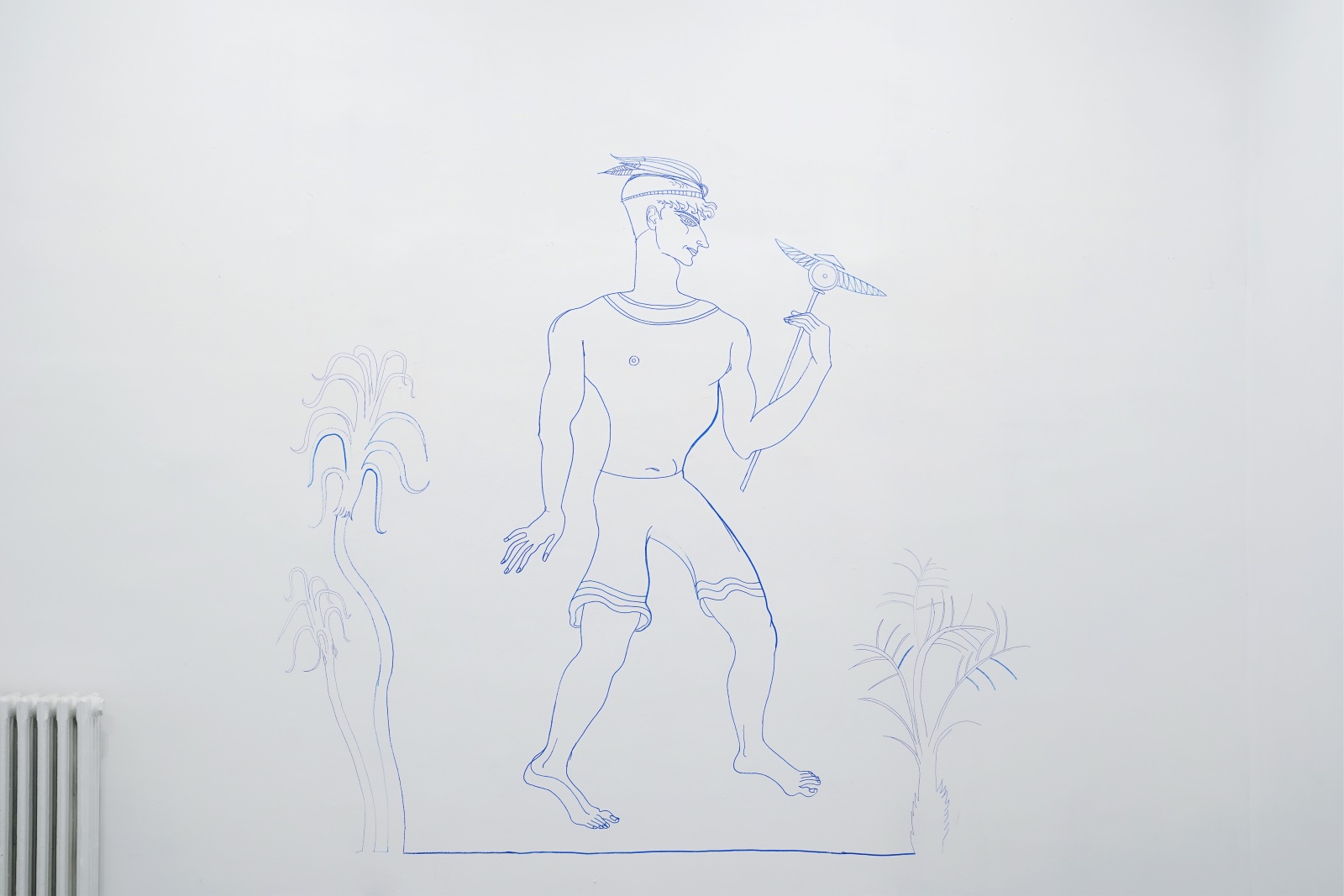
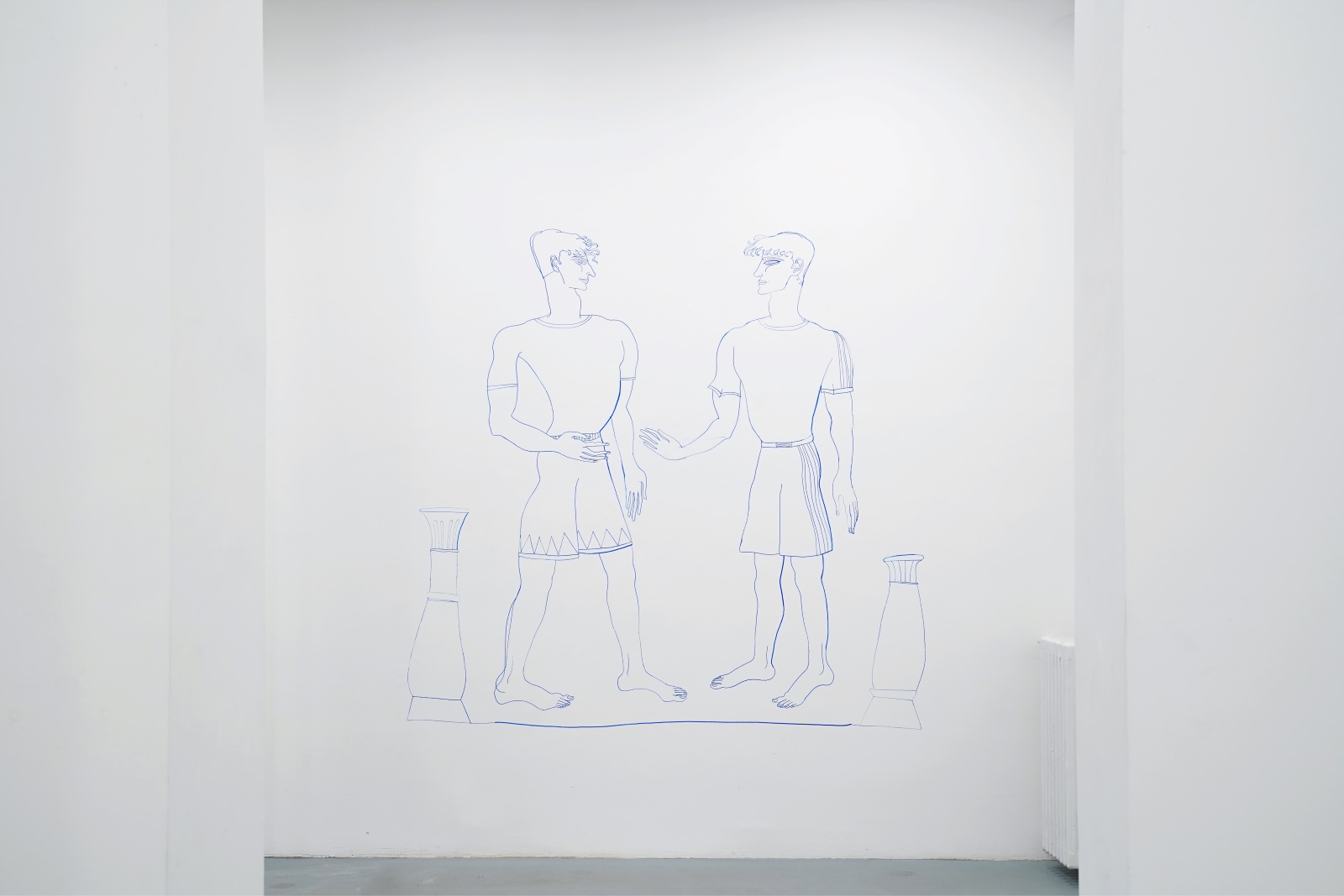
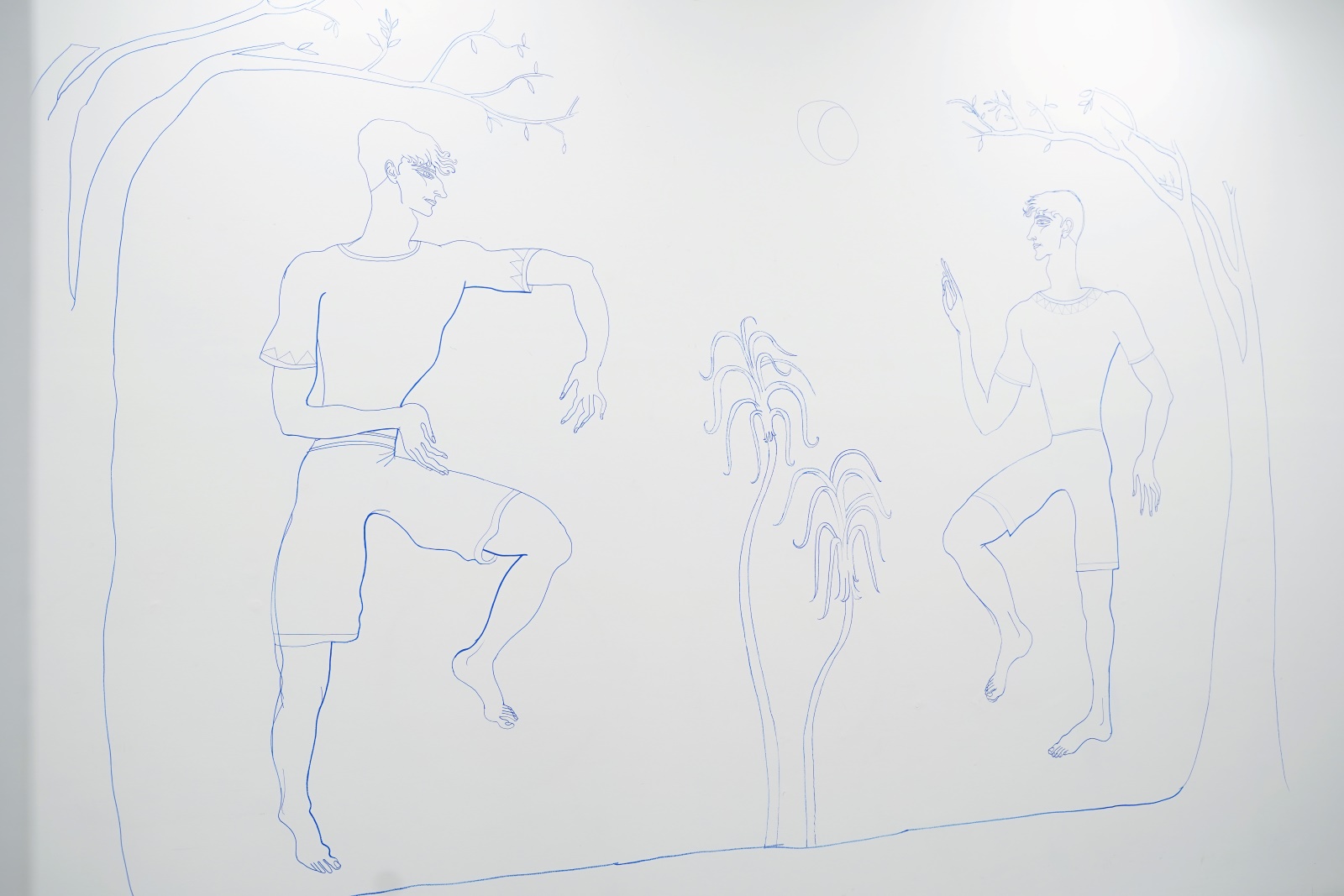
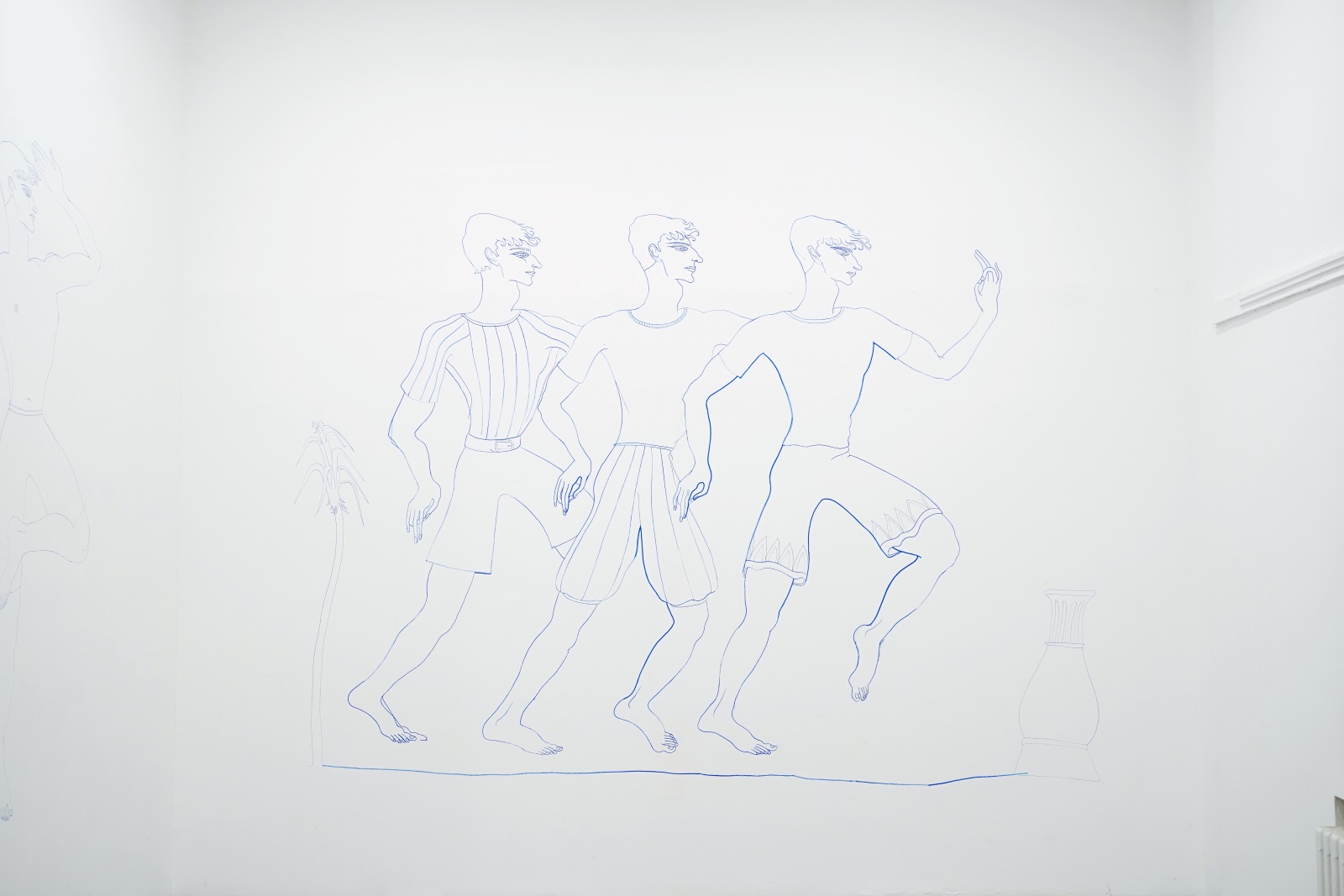
The tripartite structure corresponds to the love narrative and to the protagonists’ (as well as the artist’s own) relationship toward life. In the first segment, we see scenes from the everyday life of a couple engaged in various activities. The arrangement of scenes is non-narrative and therefore does not establish a chronological sequence, encouraging viewers to explore freely and according to their own inclination. The following section, which contains only two scenes, represents, according to the artist “the life of one of them in solitude after the loss of their partner.” The depiction of the recollected scene of their first encounter forms the thematic climax of the exhibition, while also serving as a link between the first and third sections, between life and death. We are led into the final segment by a figure resembling a shaman, guiding us toward the so-called Eden. This enigmatic character stands between the mortal and the immortal as a mediator. The explanation of this figure’s identity can be found in Plato’s “Symposium”. In the dialogue between Socrates and Diotima, the priestess from Arcadia, Eros is described as a being situated between mortality and immortality.[1] Love is what stands at the threshold of these two states, embodying its mystical interpretation according to which Eros/Amor is a god of death.[2] Thus, it is in death that the lovers are reunited, their bond now extended into eternity.
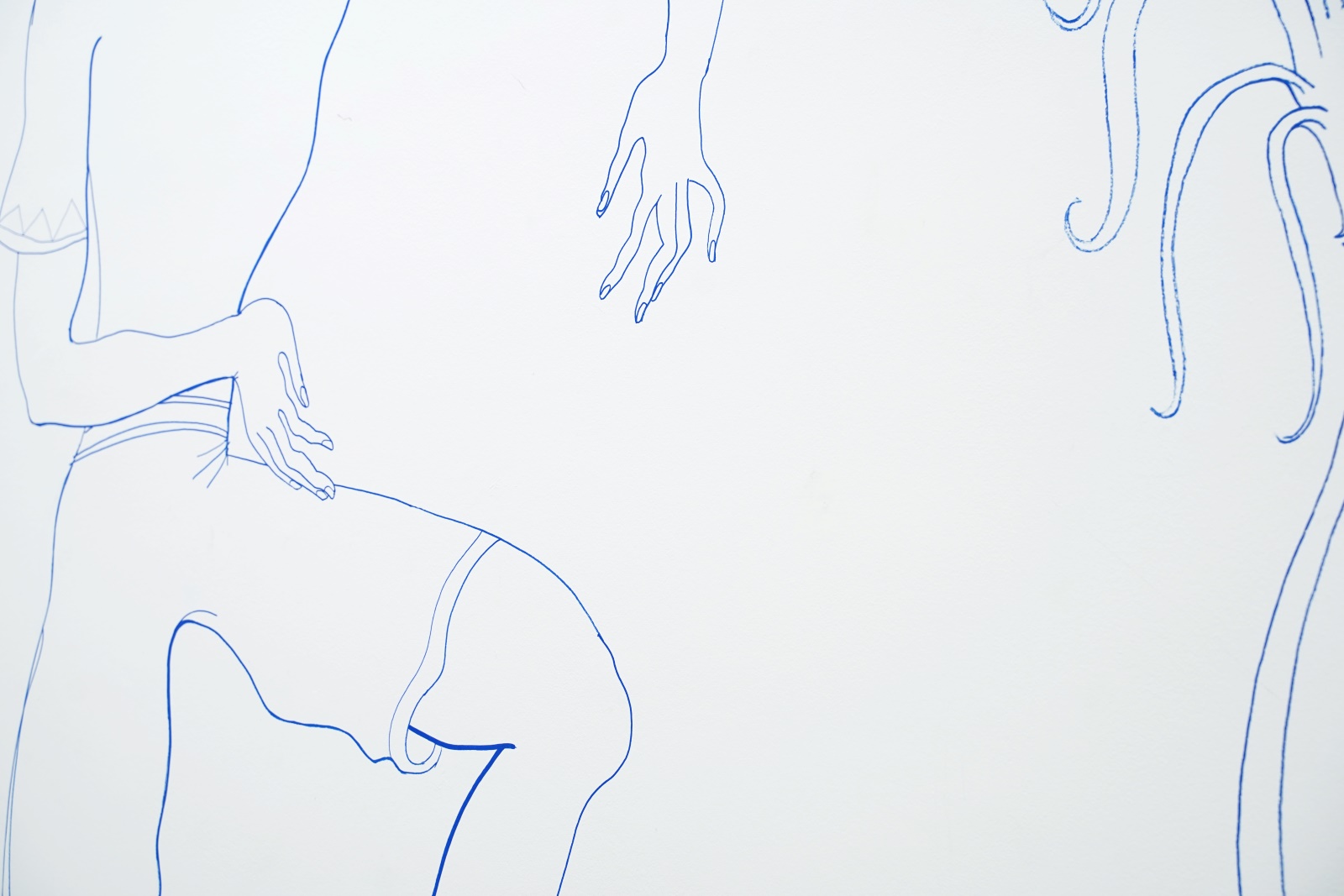
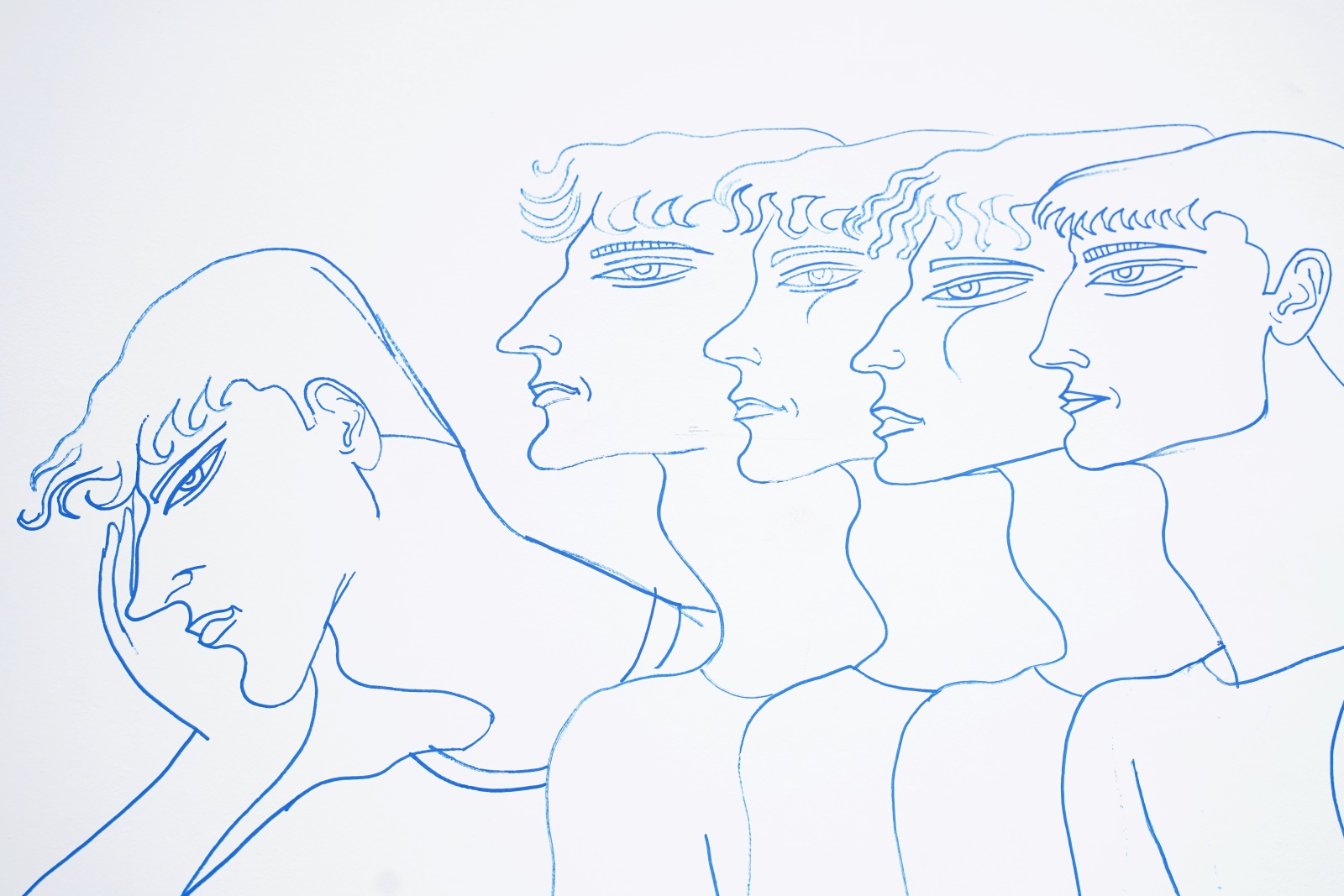
The figures in Filip Savković’s drawings are presented in a manner reminiscent of the canon of ancient Egyptian, Indian, and Classical Greek art. However, these figures, especially in the first segment of the exhibition, are shown engaging in activities characteristic of contemporary life. This anachronism serves as a means of establishing a connection between the distant past (and distant cultures) and the present. A logical question arises: what is the purpose of such a temporal and spatial linkage? The answer lies in a quote by Joseph Campbell: “follow your bliss.” Referring to the teachings of Vedanta, he speaks of being, consciousness, and bliss, which, in the artist’s conception, correspond in a specific way to the sections of the exhibition. They relate to existence as a couple, awareness of death, and the cause of bliss through love in the afterlife. Taking into account Campbell’s concept of the monomyth, that is, the recognition of profound similarities in mythic structures across different cultures, the universality of human experience emerges as the central theme of Savković’s work. The artist presents myth as “a metaphor that could be of use to a person in everyday life.”
It may be observed that this conceptual syncretism is accompanied by a parallel in the artist’s drawings, which, as noted, represent his interpretation of several different canons of the human figure. The drawings were created from memory, unburdened by direct or literal reproduction of reality in their details. This results in a certain degree of abstraction that enhances the symbolic visual impression and effectively conveys the symbolic reading of the exhibition’s central theme – love.
Jovan Đorđević
PhD candidate at the Department of Art History, Faculty of Philosophy, University of Belgrade
[1] Platon. Gozba, u: Dela. prev. M. N. Đurić, Beograd, 2006. 55.
[2] E. Vind. Amor kao Bog smrti, u: Paganske misterije u renesansi. prev. Lj. Nikolić, Beograd, 2019. 203-226.
Photos by: N. Ivanović